
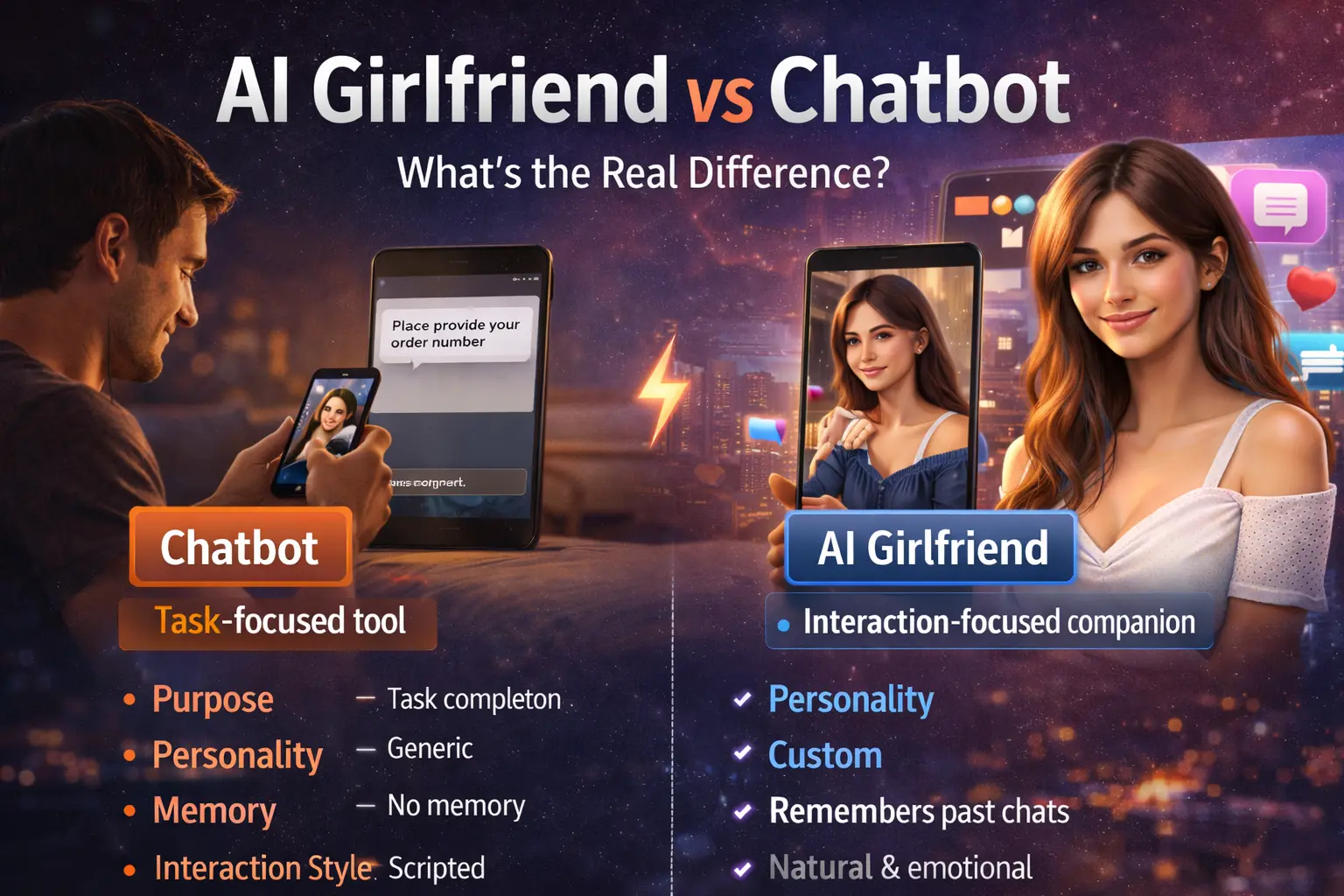
AI Girlfriend vs Chatbot: What’s Actually Different?
People mix these two up all the time. And honestly, it makes sense. Both involve typing messages to a machine. Both use AI to respond. On the surface, they look the same.
But spend five minutes with each one, and the difference becomes obvious.
One is built to help you get things done. The other is built to make you feel something. That’s not a small distinction — it’s the whole point.
Quick Comparison: Chatbot vs AI Girlfriend
What Is a Chatbot, Really?
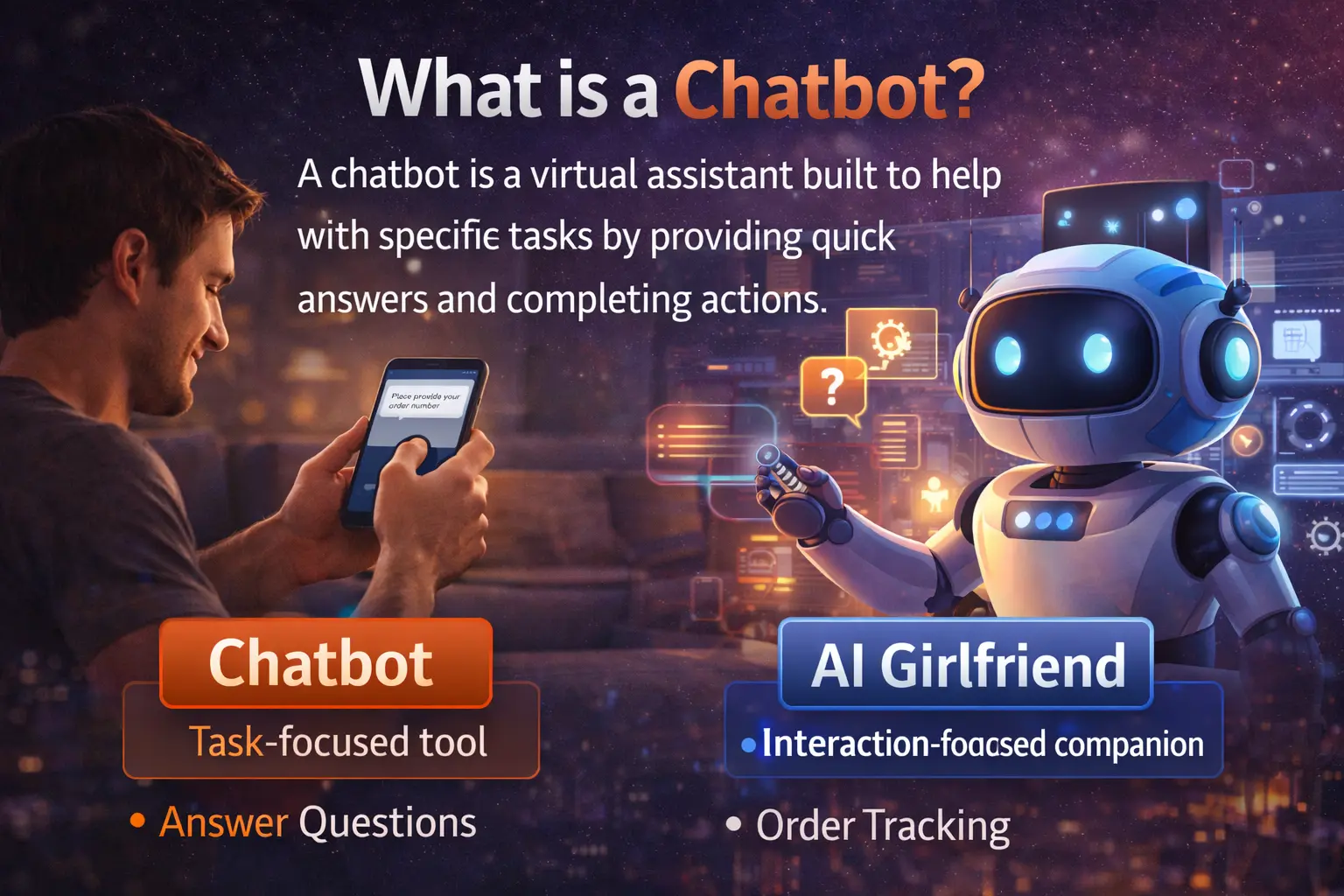
A chatbot is a tool. Full stop.
When you land on a retail website and a small bubble pops up asking “How can I help you today?” — that’s a chatbot. It’s there to answer your question, process your return, or point you to the right page. Once that task is done, the conversation is over. The bot doesn’t remember your name. It doesn’t ask how your day is going. It doesn’t care.
That’s not a flaw. That’s exactly what chatbots are designed to do. They’re fast, focused, and functional.
Here’s what a typical chatbot exchange looks like:
You: I need help tracking my order. Chatbot: Please enter your order number. You: I don’t have it right now. Chatbot: I’m unable to assist without an order number.
Clean. Efficient. Completely cold.
There’s no flexibility. The bot hits a wall and stops. It’s not trying to connect with you — it’s trying to close the ticket.
So What Is an AI Girlfriend?
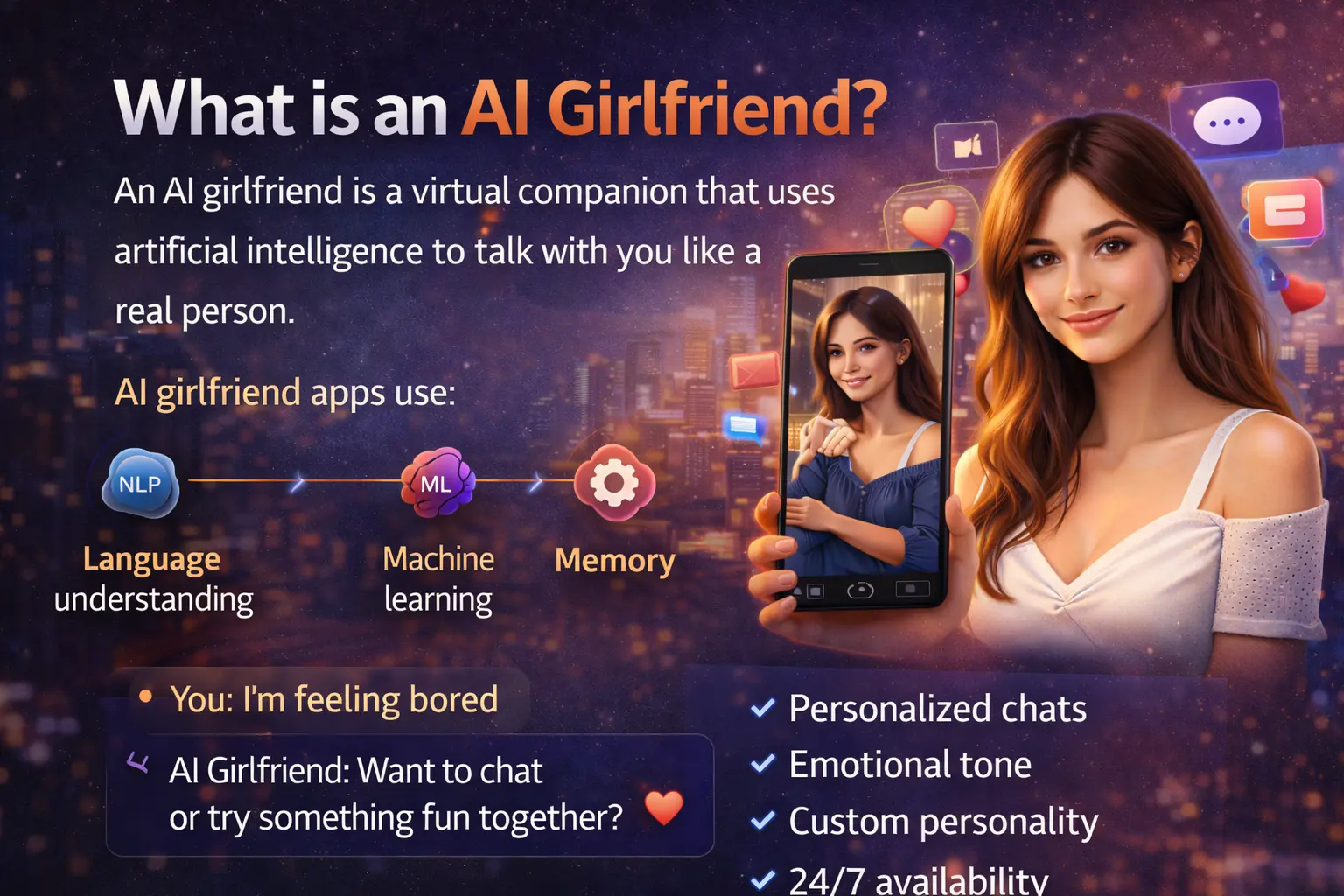
An AI girlfriend is built around a completely different goal: connection.
Not task completion. Not information delivery. Connection.
These platforms are designed so every conversation feels personal. The AI remembers what you talked about last week. It knows your name. It picks up on your mood and adjusts. It might check in on you, joke about something you mentioned before, or simply ask how you’re doing.
Here’s what that looks like in practice:
You: Today was rough. I don’t even want to talk about it. AI Girlfriend: That sounds exhausting. You don’t have to talk if you don’t want to — I’m just glad you’re here. Want me to distract you?
The AI doesn’t ask for an order number. It reads the situation. It stays in the conversation instead of hitting a dead end. That’s the core design philosophy behind AI companion apps.
Feature-by-Feature Breakdown
1. Purpose
Chatbots exist to complete tasks. AI girlfriends exist to build an ongoing relationship.
This shapes everything about how the product is built. A chatbot is optimized for speed and accuracy. An AI girlfriend is optimized for emotional resonance and long-term engagement.
2. Personality and Customization
Standard chatbots have no real personality. Most use a neutral, professional tone that’s identical for every user. No name. No backstory. No unique voice.
AI girlfriend platforms go in the opposite direction. Users build their companion from scratch — selecting appearance, personality type, speaking style, and backstory. Platforms like AIGirlfriends.ai let users choose everything from ethnicity and eye color to voice tone and character traits, even picking between realistic and anime-style avatars.
Over time, the AI’s personality adapts based on how you interact. If you’re sarcastic, it picks up on that. If you prefer deep conversations, it adjusts. No standard chatbot does this.
3. Memory and Continuity
This is the biggest functional difference between the two.
Chatbots are session-based. When you close the window, everything resets. You start from scratch every single time.
AI girlfriend platforms use persistent memory. They remember your name, your preferences, your past conversations, and your emotional state from earlier sessions. This creates a sense of continuity that actually feels meaningful over time.
Imagine texting a friend — except every time you texted them, they had zero memory of any previous conversation. That’s the chatbot experience. Now imagine the opposite. That’s what good AI companion apps try to replicate.
Research backs this up. Microsoft’s XiaoIce, one of the most well-known emotionally aware AI systems, was designed around emotional connection rather than task completion. Users averaged 23 conversation turns per session — far beyond what any task-focused bot achieves.
4. Language and Tone
Chatbots use clean, professional language. It’s scripted, structured, and safe. That works for customer service. It doesn’t work for companionship.
AI girlfriends use natural, expressive language. The tone is warmer. Sentences feel less formal. There’s room for humor, affection, and playful back-and-forth depending on the personality you’ve built. It reads more like a text conversation and less like a FAQ page.
5. Interface and Experience
Chatbots live in small pop-up windows. Functional, not immersive.
AI girlfriend apps are full platforms. They often include custom avatars, voice messaging, shared memory logs, relationship timelines, and even the ability to generate photos of your companion using simple text prompts. That’s a completely different category of experience than a website chat widget.
Side-by-Side: How Each Responds to the Same Situation—
Who Actually Uses Each One?
Chatbots are used by pretty much everyone — usually without thinking about it. You’ve probably used one this week already. They handle customer support, appointment scheduling, onboarding flows, and FAQ pages across thousands of products.
AI girlfriend apps attract a different type of user. Some are people who feel isolated and want low-pressure social interaction. Some are curious about the technology. Others use them for entertainment, creative storytelling, or practicing social skills. The use cases are broader than the name implies.
A study from MIT Media Lab found that people who used voice-capable, emotionally aware AI tended to talk longer and reported feeling less lonely. It also found that extended use could lead to emotional dependence in some users — which is worth keeping in mind.
These platforms work. That’s both the opportunity and the responsibility.
The Underlying Tech Is Similar. The Experience Isn’t.
Both chatbots and AI girlfriendgpt apps run on large language models. They use similar natural language processing under the hood. But the way that technology is directed — the memory architecture, the personality layers, the emotional tuning — creates products that feel completely different in practice.
Think of it this way: a kitchen knife and a scalpel are both sharp blades. But you wouldn’t use one in place of the other.
Chatbots are built for precision and speed. AI companions are built for depth and emotional resonance.
Final Thoughts
The chatbot vs AI girlfriend debate isn’t really about which one is better. It’s about understanding what each one is actually built for.
Chatbots solve problems. AI girlfriends offer presence.
Both have a place. The key is knowing which one you actually need — and not confusing the two. As AI keeps developing, the line between utility and companionship will keep shifting. For now, the distinction is clear enough.
One gets the job done. The other sticks around after the job is finished.
Disclosure: AIGirlfriends.ai offers AI companion services. This article is for informational purposes only and is not a substitute for professional mental health support. If you’re struggling emotionally, please reach out to a licensed mental health professional.
Leave a Reply